Natalia Berloff
Mathematics
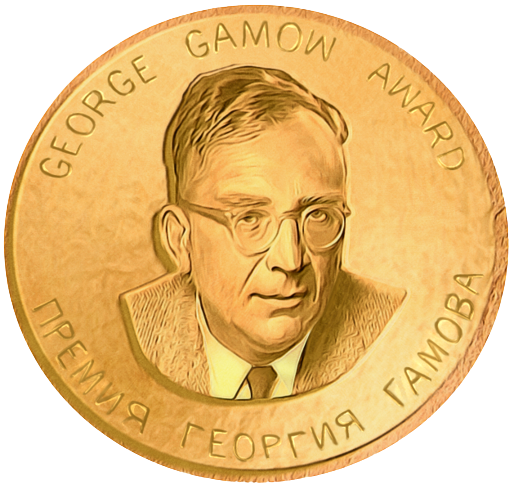
Reason for Award
"For her groundbreaking contributions to quantum hydrodynamics and physics-inspired computing, and for her extraordinary breadth of interdisciplinary research connecting fundamental theoretical advances with experimental realizability and technological potential across the logistics, fintech, pharmaceutical, and data management sectors".
“Gamow wrote that "it took less than an hour to make the atoms". Nature solved an enormous many-body problem in an hour without executing a single instruction: the physics was the algorithm. Physics-inspired computing takes this literally. We write a hard optimization problem as the energy of a network of interacting spins, build that network out of real physics, condensates, coupled lasers, oscillators, and let it relax toward its lowest-energy state. Reading off that state reads off a solution: what a digital computer does by search, the hardware does by simply evolving. I thank the RASA and the Award Committee for this recognition, and I hope it draws more physicists, mathematicians and engineers into the question of how to make physics compute,” notes Natalia Berloff.
Biography
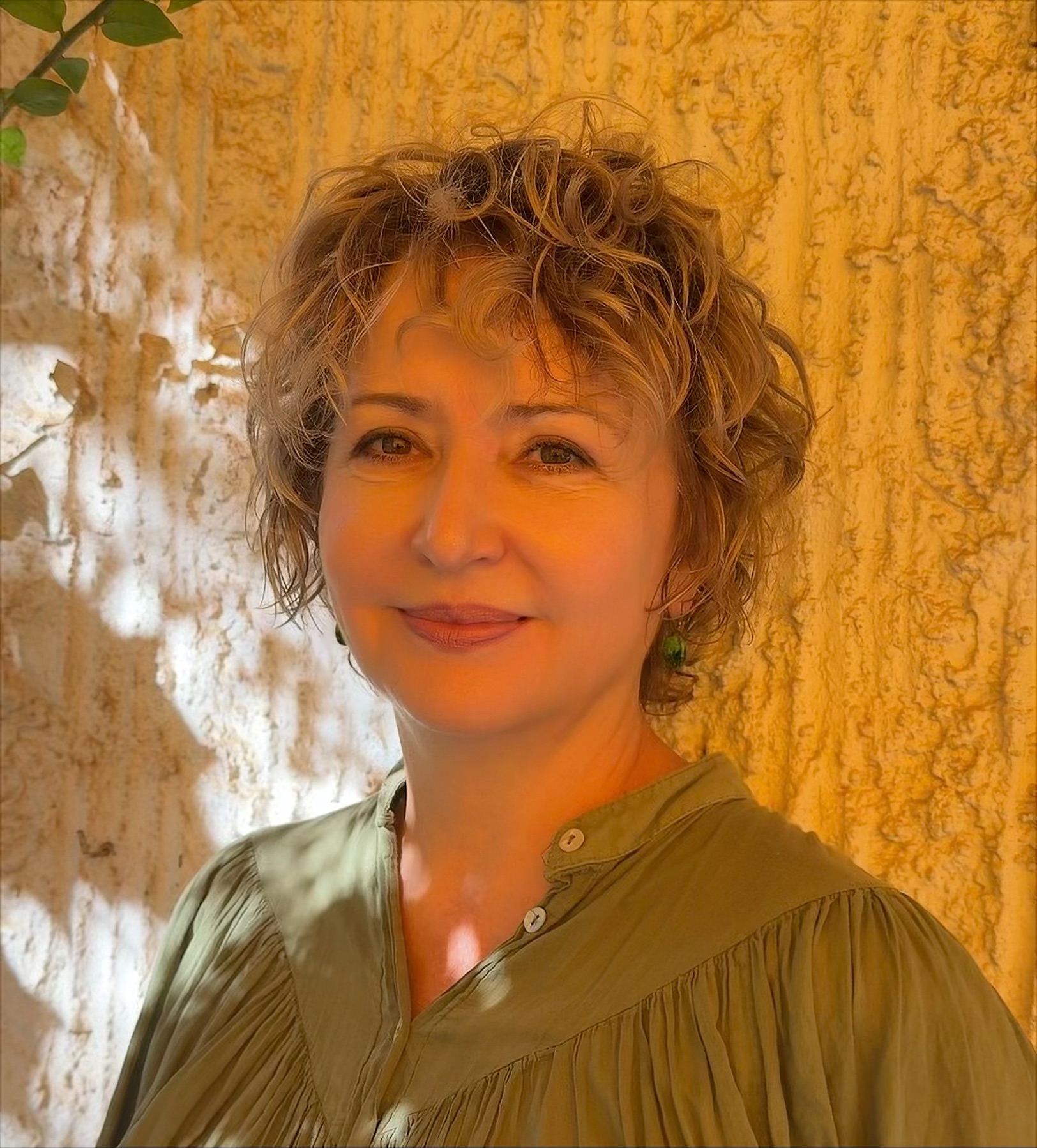
Natalia Berloff is Professor of Applied Mathematics at the University of Cambridge's Department of Applied Mathematics and Theoretical Physics and a Fellow of Jesus College. Born in Orenburg, she graduated from Lomonosov Moscow State University and received her Ph.D. from Florida State University. After research and faculty positions at the University of California, Los Angeles, she joined Cambridge in 2002. She has been Director of Photonics at Skoltech (2013-2016) and a visiting researcher at Microsoft (2021-2023). Berloff's research concerns coherence in non-equilibrium quantum systems: superfluids and Bose-Einstein condensates of atoms, excitons and polaritons. Her group was among the first to propose polariton condensates and other optical systems as physical simulators and optimizers, and now develops physics-inspired computing, from Ising and XY machines to neuromorphic architectures and analog platforms for artificial intelligence. Her honors include an NIH/NHGRI Career Development Award and the Pilkington Prize. She leads the π-computing group, co-directs the UK Multidisciplinary Neuromorphic Center (NeuroSYNC) and chairs the American Physical Society's Committee on International Freedom of Scientists.